
|
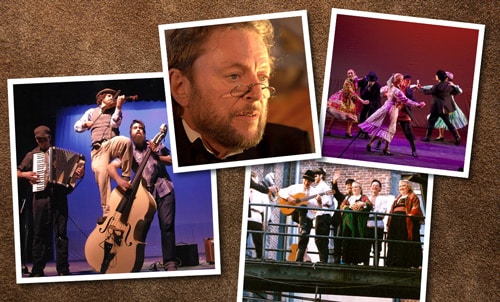
In January of 1999, to the surprise of passerby tourists and the delight of locals, Moscow Nights brought a bit of borscht to the French Quarter with its first Russian Winter Festival. The afternoon-long celebration of all things Russian took place at O’Flaherty’s Irish Channel Centre and Pub thanks to the generosity of club owner Danny O’Flaherty. Participants strolled from table to table eating Slavic delicacies, admiring (and often buying) Russian shawls, jewelry, books, crafts, and, of course, colorfully painted nesting dolls.
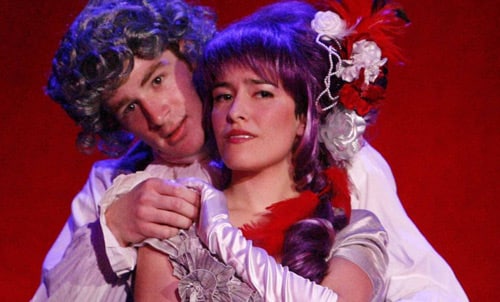
While most New Orleans festivals rely on live music to bring in the crowds, this festival stood out for the variety of its entertainment. With local actor and producer Mikko acting as Master of Ceremonies, the packed program included theatrical sketches from Nikolai Gogol’s Inspector General, Yevgeny Shvartz’s Shadow, and Samuel Marshak’s The Lady Cat-Catastrophe. Under the direction of Natasha Ramer, actors Mikko, Tristan Codrescu, Eva Earls, Phil Blunt, Mage Macchione, Stella Billings, and Mara Cooper brought the scenes to life.
There was an assortment of dance performances, ranging from folk to modern. Audiences were treated to “No More Barricades” performed by Barbara Hayley; Hayley’s dance company, New Orleans Dance Collective, performed “Khodiat Khoni” and the original choreography “Malchiki.”
Two original choreographies of Russian character dance -- “Karusel” and “Khorovodnaia” – were performed by the Komenka Ethnic Dance and Music Ensemble under the direction of John Rodi and Daniel Gianfala. Original choreography was created by the famous Boris Moiseev, an artist who came to New Orleans and stayed here awhile.
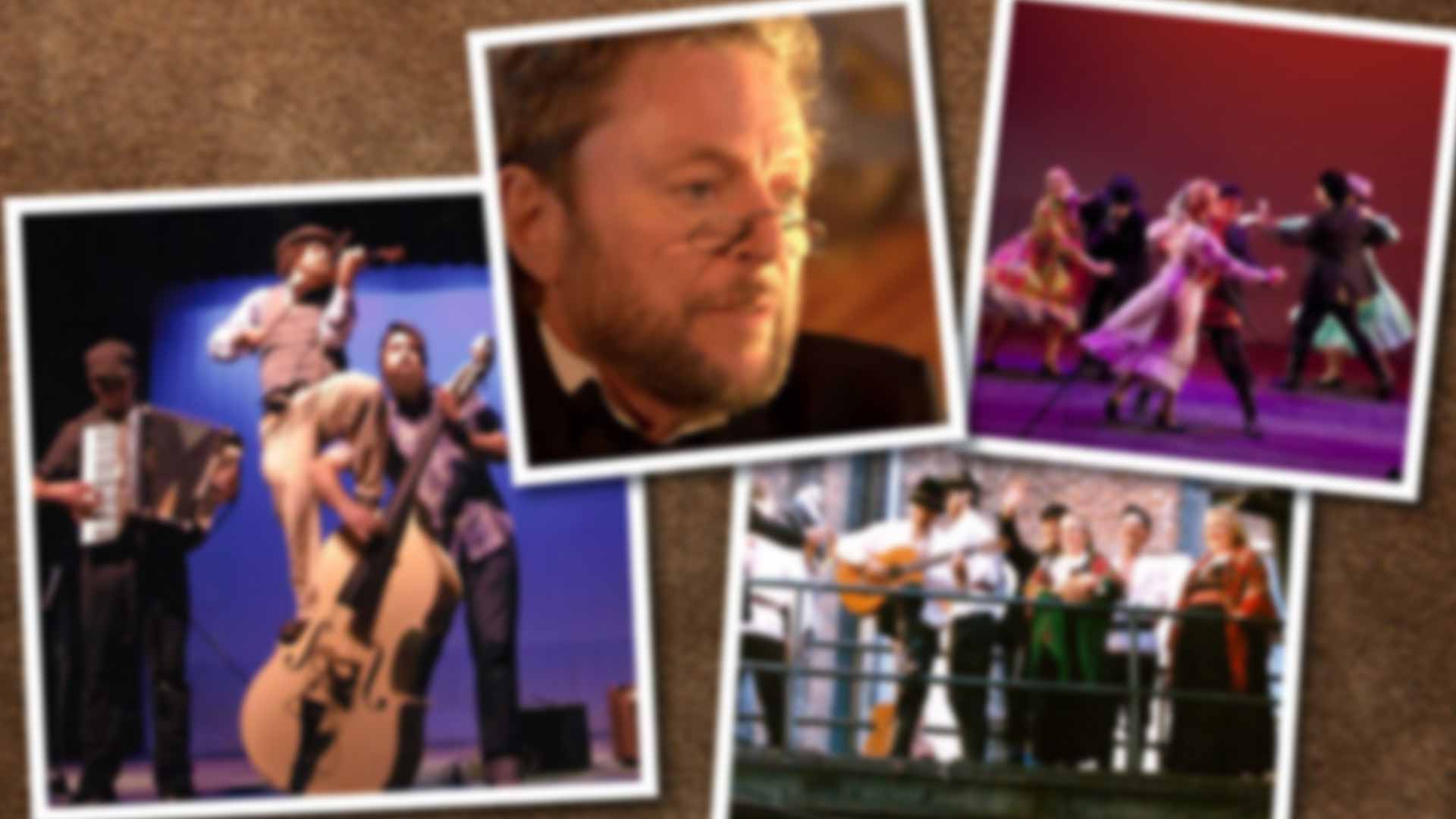
And, of course, there was music. The Komenka singers serenaded outdoor crowds with Slavic standards from the balcony. Our special guests from Atlanta, Irene and David McCullough on balalaika and guitar, took to the indoor stage with “A Stroll Through Moscow.” At the end of the program, Natasha Ramer performed a series of Russian romances with a band comprised of the McCulloughs, Misha Kachkachishvili (bass), Neti Vaan (violin), and Bart Ramsey (piano/accordion).
Balalaika player Irene McCullough wrote about this first festival, from beginning to finale, for the BDAA Newsletter, the official publication of the Balalaika and Domra Association of America. Her report noted, among other things:
Guests were invited to celebrate the New Year in the Russian spirit, encouraged to show up before the two shows to sample the food bazaar and art exhibit. Greeted by a Russian maiden in white sarafan, guests wandered through the old building’s entranceway to a charming back courtyard to mingle and revel. Thanks to Ray Kane, America’s most sought-after bass domra player, guests were never without trays of warm pirozhki….The vodka kiosk was quite active as well, and tables overflowed with Russian sandwiches and delicacies. Local artists from the Russian community had their paintings and jewelry creations on show, and the Pub’s Celtic Store was, for the day, a Russian boutique.
The event was such a success that a second Russian Winter Festival was presented in January of 2001. The program for this festival featured yet another bright array of entertainers. Musical guests included the Winter Balalaika Ensemble (with members from Atlanta, New Orleans, Ann Arbor, and Washington DC), Atlanta’s Czar Balalaika Trio, and the Django Reinhardt-inspired Tony Green and Gypsy Jazz.
This year’s festival opened dramatically, as participant Alexandra Wentzell noted:
The festival actually began on Toulouse Street just outside the entrance to Danny O’Flaherty’s Irish Channel Cultural Centre and Pub….There, in front of the pub, white horses clopped their hoofs impatiently….Musicians in Russian national costumes took their places in the carriages behind these horses and played their balalaikas and bayan. In the French Quarter you can see most anything, but this – only once a year, at the Russian Winter Festival.
Once again, Irene McCullough wrote an account of the day’s festivities for the BDAA Newsletter. In her reflection of the events, she found herself wondering if the “best part” of the festival could have been Danny O’Flaherty himself, dressed in Russian costume doing a jig in the back of his pub while Czar Balalaikas brought the house down, then later playing an Irish tune on Zhenya Tochenaya’s domra, and dancing “Korobushka” with Natasha. “That’s right, our emcee Mikko reminded the audience, “A Russian Festival in an Irish Pub in the French Quarter!” And why not? Isn’t that what you’d expect in a town known as the Big Easy?
Mikko Presents offered performances of poetry, storytelling, and language games. Natasha Ramer, singing gypsy favorites, and the dancers and singers of the Komenka Ensemble rounded out the festival’s list of performers, while several “market waifs” made their presence known at the bazaar.
This festival was made possible through generous grants from the Louisiana Division of the Arts, the New Orleans Tourism Marketing Corporation, the Georges Lurcy Charitable and Educational Trust, Danny O’Flaherty, and Stolichnaya Vodka.
In December of 2002, the Russian Winter Festival took a different turn. Rather than hosting only one afternoon of entertainment, Moscow Nights presented a three-day event that was a “Salute to Alexander Pushkin” – a celebration of the life and work of the Father of Russian Literature. Held at the (former) Downtown Theater of the University of New Orleans, this was Moscow Nights’ most ambitious project to date.
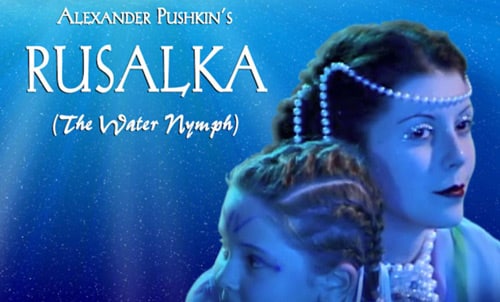
At the heart of the festival was Natasha Ramer’s staging of Pushkin’s play “The Water Nymph,” a fairy-tale legend about a girl who risks all for love. Professor James Falen, one of the foremost translators of Pushkin’s work, translated the play, which is in verse, for Moscow Nights. Georgian composer Zaza Marjanishvili wrote the original musical score, and John Rodi, director of the Komenka Ethnic Dance and Music Ensemble, added choreography.
This production, which was performed three times during the festival, marked the first presentation of The Water Nymph to American audiences. Click here to read more about Moscow Nights’ presentation of this play.
In addition to the play, audiences were treated to a lecture by Dr. Boris Gasparov of Columbia University on the poet’s life and literary significance (click here to read more about this lecture), as well as theatrical readings of Pushkin’s poetry in both Russian and English. Through it all, there was a bazaar in the lobby featuring books by and about Pushkin (courtesy of Garden District Book Shop), as well as Russian food and crafts.
“A Salute to Alexander Pushkin” was made possible by grants from the Arts Council of New Orleans, the Louisiana Endowment for the Humanities, the Georges Lurcy Charitable Educational Trust, and the Arts Administration Program at the University of New Orleans.
There were great plans in place for the fifth Russian Winter Festival – “Treasures of the Russian Gypsy,” which would have included a performance of Pushkin’s The Gypsy. But in August of 2005, Hurricane Katrina changed not only Moscow Nights’ plans, but those of an entire metropolitan area. The organization, having lost its homebase and many of its board members, took time off to regroup and reorganize; now, Moscow Nights is making plans for the next Festival.
The most successful dimension of our Russian Winter Festival-2008 was the concert-play “Adventures Around Moscow,” written and directed by Natasha Ramer. The concert blended musical performances, theater, poetry and dance. This concert was beautifully presented and performed, and showcased the performers cleverly in a way that was much more effective than a sequential program would have been.
As the lights dim, Natasha comes on the stage and announces to the audience that she has always had the dream of “taking all of you with me to Moscow during the winter holidays, and especially for the Old New Year!” So begins the journey, complete with a “Wish Lady” who tells people to tighten their seat belts, sound and light effect simulating a jet landing and raucous parade of all performers, welcoming everyone to Moscow. Natasha gets a special wish for herself and Alexander Pushkin, played by Roscoe Reddix, who accompanies her around the stage that is now Moscow. The stroll takes them to Red Square, where snowball-throwing children recite a Pushkin poem in Russian and in English. Here the Komenka Ethnic Dance Ensemble performs a “skating” dance. At this point everyone left together for the Actor’s Club, where we first meet the Trio “Zingaresca,” led by the Oleg Timofeev, a professor and musician. He explains the heart of Russian romances to the audience, and then he performs them. Then on to the bazaar on Arbat Street, to the cabaret theater where they’re joined by New Orleans culinary legend Emeril (actor Chris Wecklein), and finally to the Gypsy Tavern where the Trio “Zingaresca” performs the best genuine Gypsy music, and Komenka’s dancers present a dramatic Gypsy camp scene based on Alexander Pushkin’s poem “The Gypsies.” At the conclusion, Natasha, Chris, and Kate Arthurs join Harry Mayronne, Jr. to sing his “Every Day is Mardi Gras in Heaven,” a joyful return to reality and the grand finale in which everyone sings the song “Moscow Nights.”
http://blog.nola.com/mariamontoya/2008/01/russian_winter_festival_return.html
View excerpts from the Russian Winter Festival in the quick time movie below.
In writing this script, Ramer tried to include varied educational elements such as poetry, information about Russian romances, about the Actor’s Club, and about Moscow’s unique Gypsy Theater. She also drew upon great Russian music such as the theme from Sergei Prokofiev’s ballet “Romeo and Juliet”.
This grant made it possible for us to invite the great Russian virtuoso Trio “Zingaresca”, all of whose members were famous performers in Russia before coming to the United States. Our audiences raved over their performance. Moscow Nights once again achieved its goal of presenting programs that would enhance its audience’s understanding and appreciation for various aspects of Russian culture.
Click here to see a slideshow of images from Winter Festival 2008
return to top of page
|